
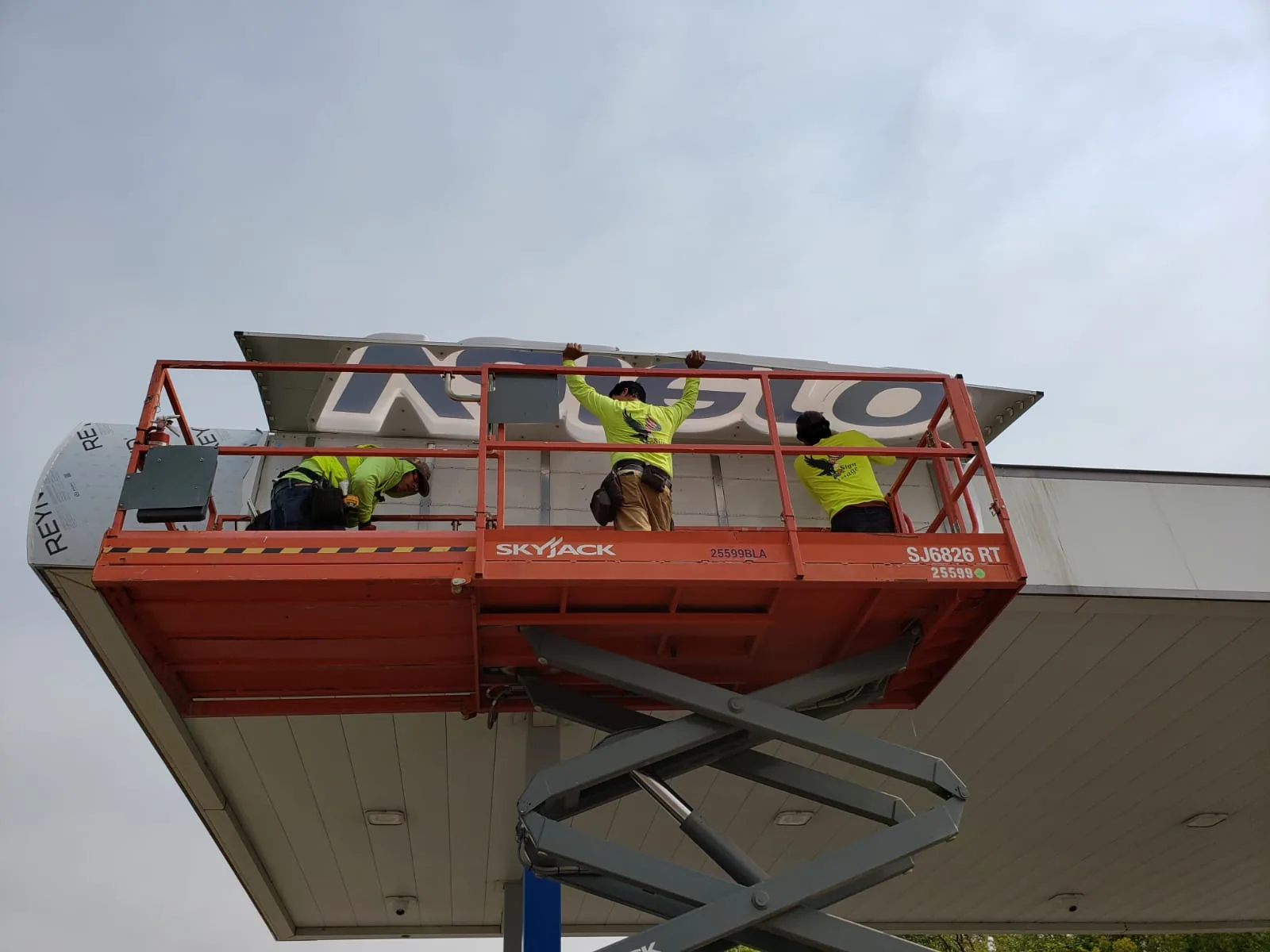
When you hire a sign company for your California business, the license classification they hold matters more than most business owners realize. A C-45 sign contractor license is issued by the California Contractors State License Board and represents a specific authorization to install and service commercial signage. It is not a general construction license — it is a specialty classification designed specifically for the sign industry.
Choosing an unlicensed or incorrectly licensed contractor puts your business at serious risk. From permit rejections to liability exposure, the consequences of working with an unqualified installer go far beyond a failed inspection. Understanding what a C-45 license means — and why it matters — helps you make a more informed decision when selecting a sign partner.
AA Sign Image holds an active C-45 license in California and has built its reputation on code-compliant, safe, and professionally managed signage projects. Whether you need sign permits and drawings, fabrication, or commercial sign installation, our licensed team handles every phase.
What Is a C-45 Sign Contractor License?
The C-45 classification is one of dozens of specialty contractor licenses issued by the California Contractors State License Board (CSLB). It specifically authorizes contractors to install, maintain, alter, and repair electrical and non-electrical signs, including the associated electrical and structural work necessary to complete those installations.
To obtain a C-45 license, an applicant must pass a written examination that tests knowledge of sign construction, installation methods, electrical requirements, California building codes, and business practices. The applicant must also demonstrate a minimum of four years of journeyman-level experience in the sign trade and carry the required insurance.
The CSLB requires all active license holders to maintain current general liability and workers’ compensation insurance, file periodic renewals, and comply with ongoing continuing education requirements. This ongoing oversight ensures that licensed contractors stay current with evolving safety standards and code changes.
Why the C-45 License Matters for Your Sign Project
Legal Authority to Pull Permits
In most California cities, sign permits must be pulled by a licensed contractor. A C-45 sign contractor is specifically authorized to apply for sign permits, manage the plan check process, respond to city correction notices, and coordinate final inspections. Without this license, a sign company cannot legally manage the full permitting workflow on your behalf.
Permits protect your business. They document that your sign was reviewed and approved by the city, ensuring it meets structural, electrical, and aesthetic requirements. If something goes wrong with an unpermitted sign — a structural failure, an electrical fire, an injury — the liability falls squarely on the property owner and the installer.
Code-Compliant Electrical Connections
Nearly all modern commercial signs — channel letters, cabinet signs, pylon totems, and LED displays — require electrical connections. The C-45 license authorizes sign contractors to perform the electrical work associated with sign installations within defined parameters. This includes connecting to an existing circuit, running conduit, and wiring illuminated sign components.
Improperly wired signs are a fire hazard. Code-compliant electrical work performed by a licensed contractor ensures that your sign’s power supply, circuit protection, and grounding meet California’s Title 24 energy code and NFPA 70 electrical code requirements.
Questions to Ask Before Hiring a Sign Contractor in California
Before signing a contract with any sign company, ask these essential questions to verify their qualifications and protect your investment.
- What is your CSLB license number? — Verify it at cslb.ca.gov before work begins.
- Is your C-45 license current and in good standing? — Expired or suspended licenses offer no legal protection.
- Do you carry general liability and workers' compensation insurance? — Ask for certificates of insurance naming your business as an additional insured.
- Will you pull the permit for this project? — A licensed contractor should manage the permit, not hand it back to you.
- Have you worked in this city before? — Local experience matters; permit processes vary by jurisdiction.
- Can you provide references from similar commercial projects? — Ask for clients in the same industry or with similar sign types.
The Difference Between Licensed and Unlicensed Sign Work
The sign industry, unfortunately, has a segment of unlicensed operators who undercut licensed contractors by skipping overhead costs like insurance, bond coverage, and license fees. While their pricing may look attractive upfront, the risks they create for property owners are substantial.
Unlicensed sign work cannot be permitted, which means your sign may violate local zoning codes from the moment it goes up. If the city discovers an unpermitted sign, you can be required to remove it at your own expense or pay fines until it is brought into compliance. Neither outcome is good for business.
Insurance gaps are equally serious. If an unlicensed contractor’s employee is injured on your property, or if their work damages your building, you may be held liable because there is no contractor insurance to pursue. Licensed contractors carry the coverage to protect all parties involved.
C-45 Licensing and Specialty Sign Types
Gas Station and Fuel Canopy Signage
Gas station signage involves high-voltage electrical systems, UL-listed sign components, and strict code compliance for fuel canopy areas. A licensed C-45 contractor with experience in petroleum retail environments is essential for safe installation. Our gas station branding services cover the full scope of code-compliant fuel site signage.
LED Displays and Digital Signage
LED displays and digital signage require specialized electrical infrastructure and programming expertise on top of standard sign installation skills. The C-45 license covers the installation and wiring of these systems, but the best contractors also have manufacturer-certified training for the specific LED display brands they install.
Monument and Pylon Sign Foundations
Freestanding custom monument signs and custom pylon signs require excavation, concrete foundations, and structural steel work in addition to the sign fabrication and illumination. The C-45 license covers the sign-specific portions of this work, often in coordination with a general contractor for the foundation and concrete work.
Why AA Sign Image Is California's Trusted Sign Partner
AA Sign Image has been serving California businesses as a licensed C-45 sign contractor for years, building a track record of safe, compliant, and visually compelling signage installations. Our team includes certified electricians, experienced fabricators, and trained installation crews who understand the full scope of what it takes to deliver a code-compliant sign project.
We work with businesses across California — from single-location retailers and restaurants to multi-site national chains and gas station operators. Our custom sign manufacturing capabilities, in-house permit management, and experienced installation crews make us a one-stop sign partner for projects of any scale.
Ready to work with a licensed, insured, and experienced sign contractor? Contact our team to discuss your project. You can also explore our frequently asked questions page for more information about how we work and what to expect from the sign process.
Frequently Asked Questions
What does a C-45 license allow a sign contractor to do in California?
A C-45 Sign Contractor license authorizes the holder to install, maintain, and service commercial signs of all types, including channel letters, pylon signs, monument signs, illuminated cabinets, LED displays, and more. The license also allows the contractor to pull sign permits and manage electrical connections for illuminated signage within the scope of the Contractors State License Board regulations.
How do I verify a sign contractor's C-45 license in California?
You can verify any California contractor’s license by visiting the Contractors State License Board (CSLB) website at cslb.ca.gov and entering the contractor’s license number or company name. The database will show the current license status, classification, expiration date, and any disciplinary actions on record.
Is a C-45 license required to pull sign permits in California?
In most California jurisdictions, only a licensed contractor — typically a C-45 sign contractor or a General Building Contractor — can pull a sign permit on behalf of a client. Property owners may pull permits for their own property in some cases, but businesses typically need a licensed contractor to manage the process correctly and carry the required insurance.
What insurance should a C-45 sign contractor carry?
A licensed C-45 sign contractor in California should carry general liability insurance (typically a minimum of $1 million per occurrence), workers’ compensation insurance for their employees, and auto liability coverage for company vehicles. Many commercial property owners and national chains also require contractors to carry additional insured status on their policies.