
Navigating California’s sign permit process can feel overwhelming, especially if it’s your first commercial signage project. Every city has its own rules, timelines, and documentation requirements — and a missed step can delay your opening by weeks. Understanding the fundamentals before you start saves time and money.
Whether you’re installing a new monument sign, updating channel letters on a storefront, or adding a digital display to a pylon, a permit is almost always required. California’s building and safety codes exist to protect public safety, and commercial signage must meet structural, electrical, and aesthetic standards set by local municipalities.
At AA Sign Image, our team manages the entire permitting workflow from start to finish. We handle surveys, engineered drawings, city submittals, and follow-up — so you don’t have to guess what comes next. If you want to understand the process before you begin, our sign permits and drawings service page covers everything we do.
Why Sign Permits Are Required in California
California’s commercial sign codes are designed to maintain public safety and community aesthetics. Signs must be structurally sound enough to withstand wind loads, seismic activity, and weather exposure common across different regions of the state. The permit process ensures every installation meets these safety thresholds before it goes live.
Beyond structural requirements, local municipalities use sign permits to enforce zoning codes, design standards, and size limitations. In many cities, commercial corridors have design guidelines that dictate letter height, illumination type, cabinet depth, or setback distances. Permits are the mechanism cities use to verify compliance.
Operating a sign without a required permit can result in fines, forced removal, and business disruption. Working with a licensed contractor who understands California’s permitting landscape from the outset protects your investment and keeps your project on schedule.
Step-by-Step Overview of the California Sign Permit Process
Step 1: Site Survey and Feasibility Review
Every permit project begins with a site survey. A qualified technician visits the property to assess existing infrastructure, measure the available sign area, photograph the building facade, and identify any utility conflicts. This information forms the foundation of your permit application.
During the feasibility phase, the sign company reviews local zoning ordinances to determine maximum allowable sign area, height restrictions, illumination rules, and setback requirements. Some cities also require a pre-application meeting with the planning department before any drawings are submitted.
Step 2: Design and Engineered Drawings
Once the survey is complete, the design team creates permit-ready drawings that include elevations, dimensions, color specifications, and installation details. For most permanent signs, a licensed structural engineer must stamp the drawings to certify they meet California’s load requirements. Our custom sign manufacturing process integrates engineering requirements early to avoid costly redesigns.
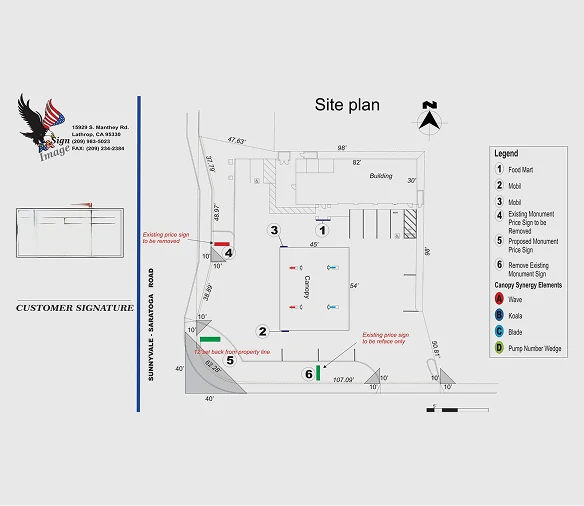
The drawing package typically includes a site plan showing sign placement, structural details for mounting or foundation work, electrical diagrams for illuminated signs, and specifications for materials and finishes. The more complete and accurate this package is, the smoother the city review will go.
Step 3: City Submittal and Plan Review
The completed permit package is submitted to the local building and planning department. Some cities allow digital submittals through an online portal while others still require physical plan sets. Processing fees vary by city and are typically based on the total sign valuation.
During plan review, city staff check for compliance with zoning codes, design guidelines, and building codes. If corrections are needed, the plan checker issues a correction letter requesting additional information or revised drawings. Responding promptly to corrections is key to minimizing delays.
Common Documents Required for a California Sign Permit
While requirements vary by jurisdiction, most California cities ask for a similar set of documents in a sign permit application. Being prepared with all required materials at the time of submittal speeds up the review process considerably.
- Completed permit application form — provided by the city or county
- Sign design drawings — showing dimensions, colors, materials, and installation method
- Structural engineering calculations — required for most permanent signs
- Site plan — showing sign location relative to building, property lines, and street
- Electrical diagram — required for all internally illuminated or digital signs
- Property owner authorization — landlord consent letter if tenant is applying
- Contractor license information — C-45 sign contractor license number and insurance certificates
Sign Permit Timelines Across California
Permit timelines vary significantly from one California city to another. Smaller cities with streamlined processes may issue approvals in as little as two to three weeks. Major metropolitan areas like Los Angeles, San Francisco, or San Jose often take six to twelve weeks for standard projects, and even longer for signs requiring discretionary review.
Projects in historic districts, redevelopment zones, or areas with design review boards typically have additional review stages that extend timelines. Understanding these factors before finalizing your project schedule helps you set realistic expectations for your grand opening or rebranding launch date.
Rush permit programs exist in some jurisdictions that allow applicants to pay a premium for expedited over-the-counter review. Our team stays current on which cities offer these programs and can recommend the fastest path forward based on your location and project type.
Permit Requirements for Different Sign Types
Channel Letter Signs
Channel letter signs are among the most common commercial signage types in California and almost always require a permit. In addition to structural drawings, electrical permits are typically required for the LED lighting systems inside each letter. Our team handles channel letter signs from concept through permit approval and installation.
Monument Signs
Custom monument signs require both building and electrical permits in most California cities. Because they are freestanding structures, they must meet foundation and structural requirements in addition to sign code. Engineering drawings are almost always required for monuments over three feet tall.
Pylon and Pole Signs
Custom pylon signs are among the most complex permit applications because of their height and structural demands. Wind load calculations, foundation engineering, and electrical permits are all part of a pylon permit package. Some cities have height caps or require variances for pylons that exceed the standard allowed height.
How AA Sign Image Manages the Permit Process
AA Sign Image is a licensed C-45 sign contractor in California, which means we are fully authorized to pull permits, manage submittals, respond to city corrections, and schedule inspections on behalf of our clients. Our in-house permit team works alongside our design and manufacturing teams to keep your project moving without gaps.
From the initial survey through final inspection sign-off, we track every milestone and communicate proactively so you always know where your permit stands. Our commercial sign installation crew coordinates installation timing around permit approvals to avoid any work stoppages on-site.
If you have questions about whether your project needs a permit, what the timeline looks like for your city, or how to get started, contact our team for a free consultation. You can also visit our frequently asked questions page for quick answers to common permit questions.
Frequently Asked Questions
How long does a sign permit take in California?
Timelines vary by city, but most California municipalities take 4 to 8 weeks for standard commercial sign permits. Complex projects requiring structural engineering review or variance approval can extend to 12 to 16 weeks. Working with an experienced sign company that handles the full permitting process helps avoid delays.
Do all commercial signs require a permit in California?
Most permanent commercial signs in California require a permit, including channel letters, monument signs, pylon signs, awning signs, and digital displays. Temporary signage, window graphics under a certain square footage, and some directional signs may be exempt, but requirements vary by city. Always verify with your local planning department.
What is an engineered drawing for a sign permit?
An engineered drawing is a set of technical plans stamped by a licensed structural or civil engineer that demonstrates how your sign will be safely installed. It includes load calculations, mounting details, wind resistance specs, and foundation requirements. Most California cities require engineered drawings for signs over a certain size or height.
Can a sign company pull the permit for me?
Yes. A licensed C-45 sign contractor in California is authorized to apply for and manage the sign permit on behalf of the property owner or business. At AA Sign Image, we handle the full permitting process — from initial survey and drawings to city submittal and approval tracking — so you can focus on your business.