
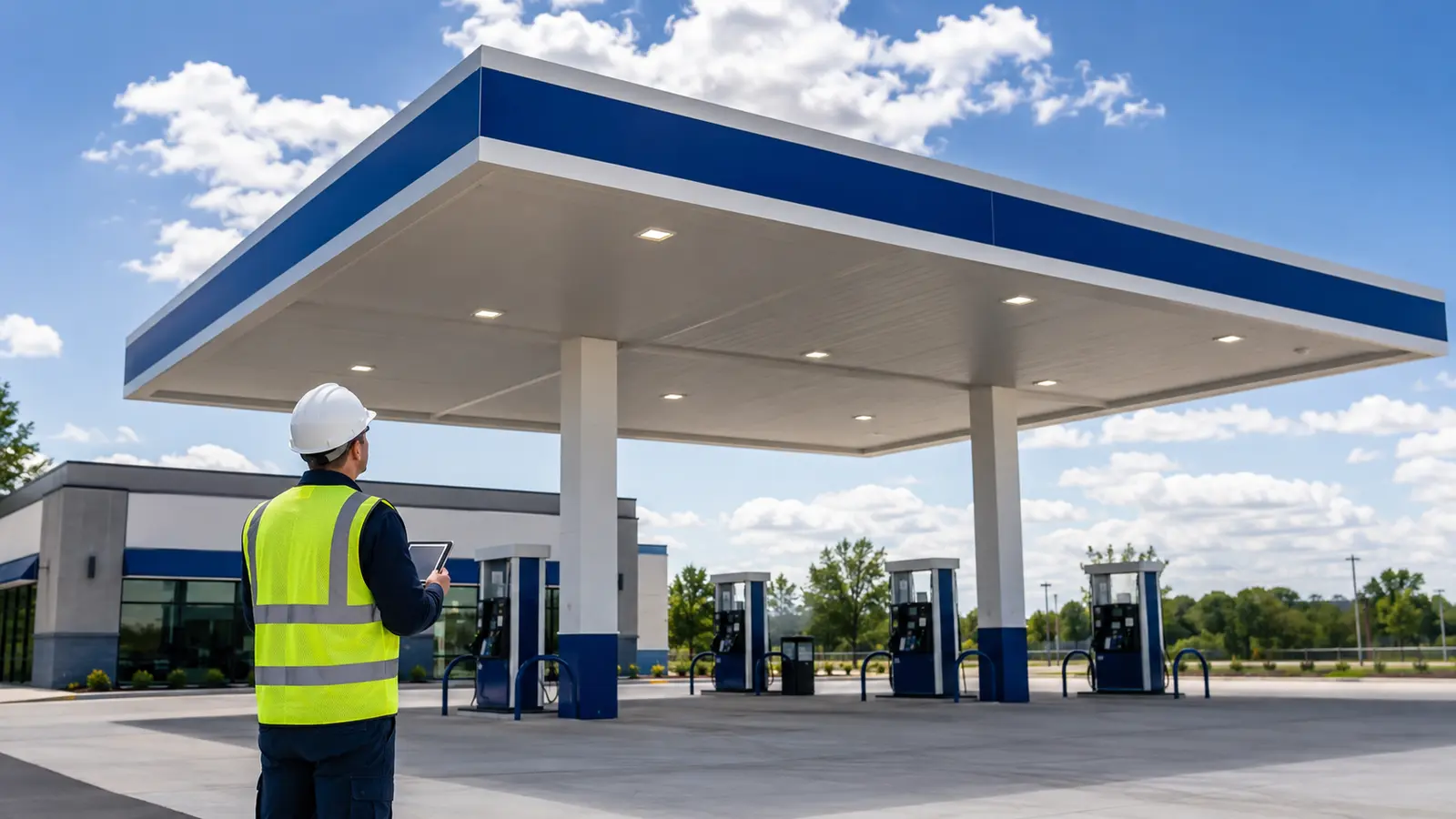
A fuel-site canopy is part shelter, part lighting platform, and part brand system. Fascia panels, finishes, graphics, lighting, drainage paths, columns, and attachments all contribute to how the site looks and functions. A practical maintenance program begins with documented observation and sends electrical, structural, and work-at-height issues to qualified professionals.
This checklist is designed for operators and facility managers who need a consistent way to record visible conditions. It is not a repair manual and does not replace manufacturer instructions, site safety procedures, or professional inspection.
Start With a Safe Observation Plan
Choose a time that allows the site to remain controlled and operations to continue safely. Observe from normal ground-level positions and avoid climbing, opening electrical equipment, removing panels, or entering restricted areas. If a condition appears unstable, energized, leaking, or likely to affect customers or employees, secure the area according to the site’s safety procedures and contact the appropriate professional.
Electrical service work requires specific training and controls. OSHA states that only qualified persons may work on energized electrical equipment and that exposed live parts generally must be de-energized before work, unless a defined exception applies. California also requires employers to use hazardous-energy control procedures for covered servicing activities.
The facility checklist should therefore focus on what can be seen and documented without performing the repair.
Review the Canopy From Each Customer Approach
Walk the normal customer paths and photograph the canopy from each entrance, the dispenser area, and the street-facing direction where it can be done safely. Look for changes in alignment, color, lighting, panel condition, and overall presentation.
Use the same viewpoints during each review. Consistent photographs make it easier to identify gradual fading, movement, staining, or lighting decline that may be difficult to notice from memory.
Record the date, site, canopy side, asset or area identifier, and weather conditions if they affect what is visible.
Inspect Fascia Panels and Brand Surfaces
The fascia creates the canopy’s most visible brand plane. Review it for:
- Loose, bowed, cracked, or displaced panels
- Open seams or failed trim
- Peeling, blistering, chalking, or uneven coatings
- Faded colors or graphics that no longer match the approved brand standard
- Impact marks, punctures, or exposed substrate
- Streaking that may indicate water movement
- Missing fasteners or trim visible from the ground
Do not press, pull, or attempt to reseat a panel during an observation. Movement can indicate an attachment or substrate issue that requires controlled access and a closer professional assessment.
AA Sign Image’s gas station branding service includes canopy and fascia systems, cladding, refinishing, illumination, price signs, dispenser graphics, and related brand implementation work.
Check Canopy Lighting After Dark
A daylight review cannot show the full lighting pattern. Schedule a separate nighttime observation and note:
- Fixtures that are dark, cycling, flickering, or visibly discolored
- Uneven pools of light between dispenser positions
- A noticeable difference in color between fixtures
- Lens damage, missing covers, or visible moisture
- Areas where signs or fascia elements are no longer evenly illuminated
- Lights that remain on or off outside the expected control schedule
Record the fixture location rather than describing the issue as “one light is out.” A simple grid or numbered dispenser map gives the service team a more useful starting point.
Do not open fixtures, reset circuits repeatedly, or test exposed components. A qualified service provider should diagnose the electrical cause and follow the equipment manufacturer’s instructions.
Look for Water and Drainage Indicators
Water can affect finishes, panels, lighting, and concealed connections. From the ground, document:
- Persistent staining or drip lines
- Ponding visible along edges or low points
- Damaged or disconnected drainage components
- Corrosion around seams, fasteners, or columns
- Moisture visible inside fixture lenses or sign faces
- Deteriorated sealant or open joints that are visible without touching them
Water symptoms do not always reveal the source. A stain may originate somewhere other than directly above it, so the service request should include photographs and the conditions under which the issue appears.
Review Columns, Bases, and Protective Elements
Canopy columns and their surroundings face vehicle contact, cleaning chemicals, weather, and repeated use. Check visible surfaces for:
- Fresh impact damage or deformation
- Loose or displaced protective bollards
- Coating loss, rust, or exposed metal
- Cracks or separation at bases and adjacent surfaces
- Missing covers or trim
- Signs that dispensers, signs, or equipment have been struck
Any suspected structural movement, significant impact, or unstable component should be escalated promptly. Keep people and vehicles away from the affected area when site procedures call for it.
Check Attached Signs, Logos, and Price Elements
Brand elements attached to or near the canopy should be reviewed as individual assets. Note loose faces, missing letters, uneven illumination, cracked panels, failed graphics, open seams, or evidence of movement.
Compare the current condition with approved artwork or prior photographs. Avoid replacing one isolated color or panel without considering how the repaired area will match surrounding materials.
For broader service needs, AA Sign Image’s maintenance and repair service covers lighting components, faces, graphics, repainting, and structural restoration for commercial signage.
Keep the Forecourt and Access Conditions in the Record
Service work is influenced by the space around the canopy. Record obstacles, traffic patterns, dispenser clearances, landscaping, parked equipment, overhead conflicts, and operating-hour restrictions that could affect access.
Do not prescribe the work zone or equipment from photographs alone. The service provider should evaluate the site and determine the appropriate access plan, equipment, personnel, and safety controls.
Build a Consistent Canopy Condition Log
A useful log can be simple. Include:
- Site name and address
- Date and reviewer
- Canopy side, dispenser lane, or asset ID
- Daytime and nighttime photographs
- Condition category: fascia, lighting, water, column, sign, finish, or access
- Severity based on the site’s internal escalation rules
- Temporary site action, if any
- Service request number and assigned provider
- Repair completion date and closeout photographs
Avoid using a universal inspection interval without considering the site, equipment, climate, operating hours, manufacturer guidance, and prior history. A new canopy in a protected location may not need the same attention as an older site exposed to heavy traffic or severe weather.
Conditions That Need Professional Attention
Contact a qualified provider when the review identifies electrical faults, repeated breaker trips, damaged fixtures, exposed components, panel movement, significant corrosion, impact damage, water intrusion, structural concerns, or work that requires access above ground level.
A service request should describe symptoms rather than assume the cause. “Three north-side fixtures are dark and one lens contains visible moisture” is more useful than “replace the drivers.” Diagnosis should determine the repair.
Questions Fuel-Site Operators Commonly Ask
How often should a gas station canopy be inspected?
There is no single interval that fits every canopy. Use manufacturer guidance, site risk, operating conditions, weather exposure, prior failures, and company procedures to set a review schedule. Add a review after significant storms, vehicle impact, or visible performance changes when appropriate.
Can staff replace canopy lights themselves?
Only personnel who are qualified and authorized under the applicable safety procedures should perform electrical service. Ground-level observation and documentation should not turn into fixture access or energized troubleshooting.
What information helps a maintenance provider respond efficiently?
Provide the site address, asset location, clear photographs, daytime and nighttime symptoms, recent events such as storms or impacts, operating restrictions, and any available equipment or prior service records.
Request Canopy Maintenance Support
AA Sign Image supports canopy fascia, finishes, lighting, attached signage, and broader gas station branding work. Request a free quote with the site address, condition photographs, asset locations, and a summary of the observed issues.