A gas station rebrand is one of the most complex sign projects a California operator can undertake. Whether you are converting a site from one fuel brand to another, updating an independent station to a new identity, or refreshing an aging brand image, the scope of work spans permits, engineering, fabrication, electrical, and installation — often on a compressed timeline dictated by the franchisor or brand contract.
Understanding the full scope of a rebrand before you begin saves time, reduces surprises, and helps you set realistic expectations with your franchisor, your landlord, and your customers. This checklist covers every major phase of a California gas station rebrand, from the initial site assessment through final inspection and compliance documentation. Our gas station branding services are built around exactly this process.
Gas station signage is subject to layers of oversight — local zoning codes, fuel site safety requirements, brand standards from the oil company, and California’s energy efficiency codes. Getting them all aligned requires coordination experience and technical expertise that generalist sign companies rarely have. The checklist below reflects what a qualified sign partner should be executing on your behalf.
Phase 1: Site Assessment and Brand Package Review
Document the Existing Signage Inventory
The first step in any gas station rebrand is a thorough site assessment. A qualified sign contractor visits the property to document every existing sign component — canopy fascia, pylon or monument price signs, pump toppers, entry/exit signs, canopy soffits, building mounted ID signs, and directional signs. Photographs, measurements, and condition assessments are captured for every element.
This inventory becomes the basis for the scope of work and the permit applications. It also helps identify components that can be reused or refaced versus those that need full replacement. In California, reusing existing structural components while updating the brand graphics can sometimes streamline the permit process and reduce costs.
Review the New Brand Standards Package
The oil company or brand franchisor will provide a brand standards manual or image program package. This document specifies approved color palettes, logo usage, sign sizes, illumination requirements, and mandatory versus optional sign components. Review this package in detail during the planning phase — not after fabrication has begun.
Brand standards packages sometimes include pre-engineered sign systems that are approved for use, which can simplify the permitting process since the engineering documentation already exists. Other times, custom engineering is required because the pre-approved system does not match the specific site conditions in California.
Phase 2: Permits and Engineering
All permanent signage changes at a gas station in California require permits. This includes replacing canopy fascia, updating the pylon price sign, installing new pump toppers, and any changes to exterior lighting or signage structures. Our sign permits and drawings team manages every aspect of this process.
For gas station pylon signs — especially those displaying fuel pricing with LED price numerals — both a sign permit and an electrical permit are required. The electrical permit covers the wiring and controls for the LED pricing display system. Some cities also require a separate permit for the price sign controller or communications system.
If the rebrand involves modifying the canopy structure — changing the canopy height, extending it, or replacing structural members — a separate structural engineering review and building permit will be required in addition to the sign permit. Budget for this possibility during the planning phase, especially at older sites.
Phase 3: Fabrication Checklist
Once permits are approved and engineering is in place, fabrication can begin. For a full gas station rebrand, the fabrication scope typically includes the following components.
- Canopy fascia panels — new aluminum face panels or illuminated cabinet faces in brand colors
- Pylon or monument sign cabinet — new cabinet or refaced existing structure with brand graphics
- LED price numerals — new LED fuel price display system with controller and communication interface
- Canopy soffit graphics — brand-specified graphics or illuminated panels on the underside of the canopy
- Building-mounted ID sign — channel letters or illuminated cabinet sign on the station building
- Pump toppers — brand-specified decorative panels or illuminated toppers for each fuel pump island
- Entry/exit and directional signs — updated with new brand identity elements
All fabricated components should meet the brand standards package specifications and be manufactured to California’s UL listing requirements for electrical sign components. Our custom sign manufacturing facility produces all components in-house, ensuring quality control throughout the fabrication process.
Phase 4: Installation and Electrical
Canopy Fascia and Soffit Installation
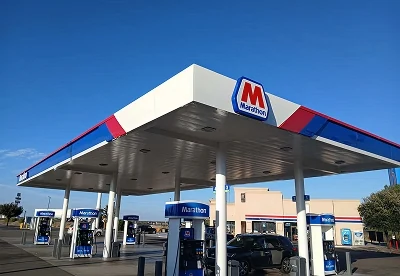
Canopy work is typically the most labor-intensive part of a gas station rebrand installation. Crews work from aerial lifts to remove old fascia panels, install new structural backing if required, and mount new panels or cabinet faces. Electrical connections for illuminated fascia must be properly terminated and inspected. Our commercial sign installation teams are experienced with gas station canopy work across California.
Pylon Sign and LED Price System
Pylon sign installation at a gas station involves both the sign structure work and the electrical infrastructure for the LED pricing display. The LED price controller needs to be programmed and connected to the POS system or a remote pricing management platform. At sites with existing pylon foundations, structural inspection may be required before mounting new sign cabinets.
Pump Topper and Canopy Soffit Installation
Pump toppers and canopy soffit graphics are typically installed last, after the major structural and electrical work is complete. These elements are brand-critical touch points that customers see up close at the pump, so installation quality and panel alignment matter significantly for brand perception.
Phase 5: Compliance and Closeout
After installation is complete, a final inspection is required by the city for all permitted work. The inspection verifies that the installed signage matches the approved permit drawings and that all electrical connections meet code. Obtaining and filing the final inspection approval is the contractor’s responsibility under the permit.
Brand compliance documentation is also required by most oil company franchisors. The sign contractor should provide as-built photos of every installed sign component, along with copies of all permit approval documents. This package demonstrates that the rebrand was completed to brand standards and in compliance with local regulations.
If your California gas station is approaching a rebrand, we can help you scope the project, understand the permit requirements for your specific city, and deliver a complete, code-compliant installation on schedule. Contact our team to start the conversation.
Frequently Asked Questions
How long does a gas station rebrand take in California?
A full gas station rebrand in California typically takes 8 to 16 weeks from project kickoff to final sign-off, depending on permitting timelines, the complexity of the sign package, and supply chain lead times for fabricated components. Projects in cities with streamlined permit programs can move faster, while sites requiring variance approvals or historic district review may take longer.
Do gas station signs require special permits in California?
Yes. Gas station signs — including pylon price signs, canopy fascia, ID signs, and fuel pump toppers — require sign permits in virtually all California jurisdictions. Signs in or near fuel dispensing areas may also require additional review from the local fire marshal or building department to ensure compliance with hazardous location electrical codes.
What is involved in replacing a gas station canopy fascia?
Replacing canopy fascia during a gas station rebrand involves removing the existing face panels or illuminated cabinet faces, fabricating new panels or cabinets to the new brand standards, and reinstalling them on the existing canopy structure. If the canopy structure itself is being modified, structural engineering may be required. Electrical connections for illuminated fascia also need to be permitted and inspected.
Can one sign company handle the entire gas station rebrand?
Yes — and it is usually more efficient to use a single, experienced sign contractor for the entire rebrand scope. A full-service sign company like AA Sign Image can manage the permit process, fabricate all sign components in-house, coordinate installation across multiple trade scopes, and handle inspection scheduling. This reduces coordination overhead and ensures all brand standards are applied consistently.