
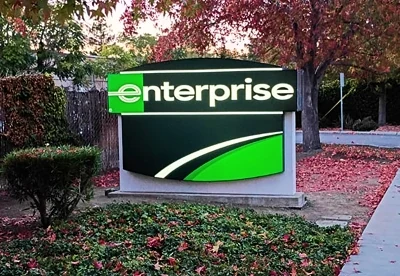
A monument sign is one of the most visible and permanent investments a California property owner or business can make. Positioned at the entry to a shopping center, office campus, industrial park, or standalone retail site, a well-designed monument sign creates a strong first impression and helps customers find your location from the road. But before that sign can go in the ground, it has to clear California’s permitting process.
Monument sign permits in California involve multiple layers of review — local zoning compliance, structural engineering, electrical permitting for illuminated signs, and sometimes discretionary design review. The process is straightforward when you know what to expect, but it can quickly become complicated without guidance from an experienced sign contractor. Our team at AA Sign Image handles custom monument signs from design through permit approval and installation.
This guide walks through the complete monument sign permit process in California, covering zoning research, engineering requirements, the submittal process, and what to expect at each stage. If you have specific questions about your site or city, our sign permits and drawings team is available to advise you.
Understanding Monument Sign Zoning in California
Zoning Code Sign Allowances
Before designing your monument sign, the first step is understanding what your property’s zoning designation allows. California cities regulate monument signs through their municipal code, typically in a sign ordinance or sign regulations chapter. These codes specify maximum sign area (in square feet), maximum height, setback from property lines, and illumination restrictions.
In most California commercial zones, a single monument sign is permitted per street frontage, subject to size and height limits that vary by city. Properties on corner lots may qualify for a second monument sign on the secondary street frontage. Multi-tenant shopping centers often get more generous allowances to accommodate tenant identification on the monument.
Variance and Special Use Permit Options
If your desired monument sign exceeds the standard code allowances, you may be able to apply for a variance — a discretionary approval from the planning commission or zoning board that grants an exception to the standard rules. Variances require a public hearing and a finding of hardship or unique circumstances. They add significant time and cost to the project, so they should be pursued only when necessary.
Some cities also have overlay zones, specific plans, or design guidelines that apply additional standards on top of the base zoning code. Properties in downtown areas, historic districts, or planned development zones often face more restrictive or more prescriptive sign standards that must be factored into the design early.
Engineering Requirements for Monument Signs in California
Monument signs are structural elements under California’s building code. Unlike wall-mounted signs that are attached to an existing building structure, monument signs are freestanding and must be engineered to stand on their own in California’s wind and seismic environment. This requires structural engineering calculations and drawings prepared by a licensed California engineer.
The structural engineering scope for a monument sign typically includes wind load analysis based on the sign’s location and exposure category, seismic load calculations per California’s CBC requirements, foundation design (typically a reinforced concrete footing), anchor bolt sizing and spacing, and steel or aluminum structural member specifications for the sign body.
Engineers use the sign’s dimensions, weight, and height to calculate the forces that wind and seismic events will exert on the structure. The foundation must be deep enough and wide enough to resist overturning and sliding. In expansive soil areas common in parts of California, the engineer may also specify additional soil preparation measures.
The Monument Sign Permit Application Process
Preparing the Permit Package
A complete monument sign permit application includes the sign design drawings (elevations, dimensions, materials, colors), structural engineering drawings and calculations, a site plan showing the sign location relative to the building and property lines, and an electrical diagram if the sign will be illuminated. Our custom sign manufacturing and permit teams prepare all of these documents in-house.
Submittal and Plan Review
The permit package is submitted to the city’s building and safety department, which routes it to the plan check division for review. Some cities also route sign permits to the planning department for zoning compliance review. If both departments have comments, the applicant must address all outstanding issues before the permit is issued.
Plan check turnaround times vary widely across California. Smaller cities with low permit volumes may complete first review within two to three weeks. Larger cities typically take four to six weeks for first review, and corrections extend the total time. Most projects require at least one round of corrections before final approval.
Permit Issuance and Inspection Schedule
Once all plan check comments are addressed and fees are paid, the city issues the permit. The permit card must be posted on-site during installation. California building codes require a series of inspections during monument sign installation: typically a foundation inspection before the concrete is poured, a structural inspection when the sign body is mounted, and a final electrical inspection for illuminated signs.
Foundation and Installation Considerations
Monument sign installation begins with excavation for the foundation. The engineer’s drawings specify the required footing depth and dimensions, which depend on the sign’s structural loads and local soil conditions. In areas with high water tables or unstable soils, the foundation may need to be deeper or wider than a standard design.
After the foundation inspection, concrete is poured around the anchor bolt cage. The concrete must cure for several days before the sign structure can be mounted — in California’s climate, this typically takes 3 to 5 days. Rushing this step risks compromising the foundation integrity.
Once the foundation is cured and inspected, the sign structure is erected, leveled, and secured to the anchor bolts. For illuminated monuments, electrical conduit is typically installed in the foundation pour and run to the sign’s junction box. Our commercial sign installation crews handle every step of this process with precision and safety compliance.
Multi-Tenant Monument Signs and Shared Identification
Shopping centers, office parks, and industrial complexes often use multi-tenant monument signs that display the names of multiple businesses on a shared structure. These signs require careful design coordination to meet all tenant identification needs within the city’s allowable sign area.
Multi-tenant monuments typically feature a base ID panel for the center name and a series of interchangeable tenant panels below. The tenant panels may be individually illuminated cabinets, push-through acrylic faces, or non-illuminated dimensional letters. The sign structure must be engineered to accommodate the total weight and wind area of all tenant panels simultaneously.
For property managers overseeing large commercial centers, our team can design and permit a monument sign system that accommodates current and future tenants while complying with local code. Contact our team to discuss a multi-tenant monument sign solution for your property, or visit our frequently asked questions page to learn more about what to expect.
Frequently Asked Questions
What is the typical height limit for a monument sign in California?
Height limits for monument signs vary by city and zoning district. Most California municipalities allow monument signs between 4 and 8 feet tall for standard commercial zones, though some cities allow taller monuments in certain corridor or regional commercial designations. Properties near freeways or major arterials may qualify for taller monument signs under specific zoning provisions. Always verify the applicable height limit with your local planning department before finalizing your design.
Do monument signs require a structural engineer in California?
Yes, in the vast majority of California cities. Monument signs are freestanding structures that must resist wind loads and seismic forces, so structural engineering calculations are required to demonstrate that the foundation, anchor bolts, and sign structure can safely support the sign under California’s building code loads. A California-licensed structural or civil engineer must stamp the drawings before the city will accept them for permit review.
How long does it take to get a monument sign permit in California?
Monument sign permit timelines in California typically range from 4 to 10 weeks for standard projects. Cities with online submittal portals and streamlined plan check processes tend to be faster. Projects that require discretionary review by a design review board or planning commission can take 3 to 6 months. Working with an experienced sign contractor who knows the specific city’s process helps minimize delays.
Can a monument sign be lit, and does that affect the permit?
Yes, monument signs can be illuminated — either internally illuminated with LED backlighting, externally lit with ground-mounted uplighting, or a combination. Illuminated monument signs require an electrical permit in addition to the sign permit. The electrical work must comply with California’s electrical code, and a final electrical inspection is required before the sign can be powered on permanently.