
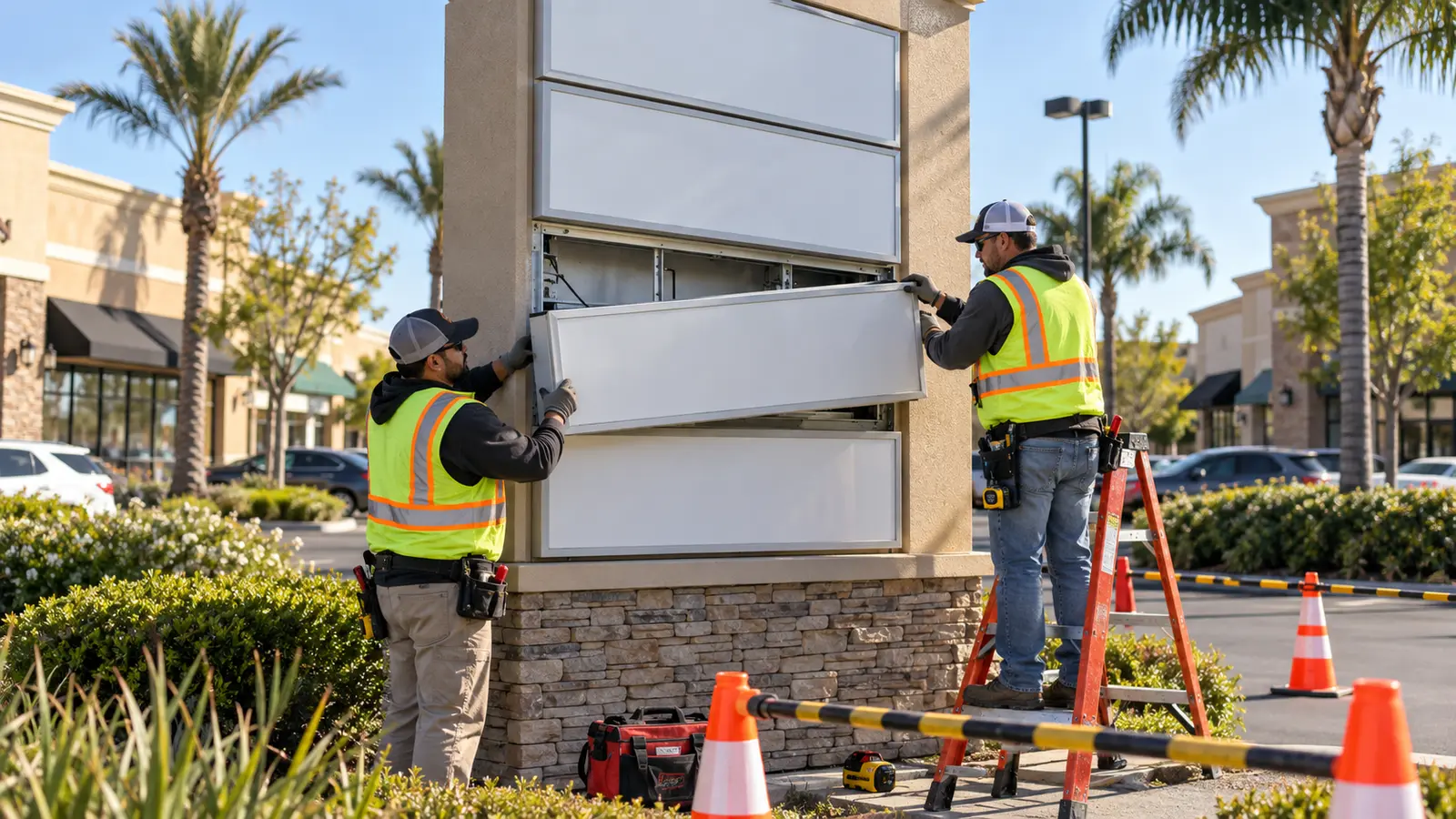
A monument sign tenant panel replacement looks simple only after the right details have been confirmed. The panel must fit the existing opening, follow the property’s sign criteria, reproduce the tenant’s brand correctly and work with the sign’s current lighting and retention system. If one of those conditions is assumed instead of measured, a new panel can arrive at the site with the wrong dimensions, opacity, color or attachment detail.
For Stockton shopping centers, office properties and multi-tenant sites, the best process begins with the property owner or manager. AA Sign Image can assess the existing monument sign, document the panel location and develop a replacement that coordinates with the overall sign rather than treating the opening as an isolated graphic.
Confirm Who Controls the Monument Sign
Before design begins, identify who owns the sign and who can authorize changes. The tenant may supply the logo, but the landlord or property manager commonly controls the monument sign, its panel layout and the appearance standards for the center.
Collect the current sign criteria, lease requirements and approval contacts. Some properties require a specific background color, letter height, logo treatment or illumination method. Others use a comprehensive sign program that establishes consistent standards across wall signs, monument signs, directories and directional signs.
Written approval protects everyone involved. It also prevents a panel from being fabricated to tenant preferences that conflict with property requirements.
Survey the Existing Opening, Not Just the Old Panel
An old panel is useful evidence, but it is not always a reliable fabrication template. Panels can be trimmed during a prior installation, retainers can shift, and different openings on the same cabinet may not be identical. A commercial sign site survey should verify the actual opening and record how the panel is held in place.
The survey should document:
- Visible opening and overall panel dimensions
- Panel thickness, material and edge condition
- Retainers, clips, fasteners or access doors
- Cabinet depth and internal clearances
- Existing lighting type and lamp-to-face distance
- Electrical condition visible within the sign-service scope
- Grade, landscaping, traffic and equipment access
Photographs should show the whole sign, the selected tenant position, close details of the retainers and the conditions around the base. This gives design, fabrication and installation teams the same reference.
Inspect the Sign Before Ordering a New Face
A faded or damaged tenant panel may be the most visible problem, but it may not be the only one. Uneven illumination, water intrusion, cracked retainers, corroded hardware or damaged wiring can affect the final result. The panel assessment should separate the requested graphic change from maintenance or repair conditions that deserve attention.
Replacing a panel does not correct every cabinet problem. If the sign is leaning, structurally damaged or has unsafe electrical conditions, those issues require an appropriate evaluation before routine face work proceeds.
Translate Brand Artwork Into a Buildable Panel
The tenant should provide approved vector artwork whenever possible. The sign designer then adapts that identity to the approved panel area, viewing distance, background and lighting method. A logo that works on a website may need different spacing or contrast to remain readable on a roadside monument sign.
Important design decisions include:
- Clear space around the logo or wordmark
- Contrast between graphics and the panel background
- Day and night appearance
- Translucent, opaque or perforated graphic treatment
- Consistency with neighboring tenant panels
Color matching also needs context. Printed references, digital screens, translucent vinyl and illuminated faces can show color differently. The approval should identify the intended material and viewing condition rather than relying only on a screen image.
Match the Material to the Existing Sign System
Common tenant panels may use acrylic, polycarbonate, aluminum composite material or aluminum, depending on whether the cabinet is illuminated and how the face is retained. The correct choice depends on opening size, required stiffness, exposure, graphic system and the existing sign construction.
For an illuminated cabinet, light transmission and diffusion matter. A panel that is too opaque can appear dark, while an unsuitable translucent graphic can show hot spots or shift color at night. The installer should also confirm that the selected thickness fits the retainers without forcing or leaving excessive movement.
Determine Whether a Permit or Program Approval Applies
Stockton’s sign standards generally require permits for erecting, moving, altering or reconstructing signs, while certain changes to copy may qualify for an exception when structural and electrical components are not altered. A tenant panel replacement may or may not fall within that limited exception depending on the actual work.
Do not assume that every “face change” is automatically exempt. A change involving cabinet modifications, electrical work, sign area, structure or location can trigger a different review. The property’s comprehensive sign program or landlord criteria may also require approval even when the municipal permit path is limited.
AA Sign Image can help review the scope and coordinate sign permits and drawings when required. The City or other applicable authority makes the final determination.
Coordinate Removal and Installation Carefully
The installation plan should protect the existing sign and keep the work area controlled. Crews may need to work near drive aisles, sidewalks, landscaping or parked vehicles. Access may require cones, a ladder or lift, and coordination with property management.
Before the old panel is removed, confirm that the replacement is on site, inspected and matched to the correct opening. Labeling the position is especially important on signs with several similar panels. During installation, check retainer engagement, panel movement, seal details where applicable and the completed day and night appearance.
If the old tenant name must disappear before the new panel is ready, discuss a temporary blank or approved interim treatment with the property manager. Improvised coverings can look unprofessional or damage the sign.
Use a Practical Approval Checklist
Before fabrication, verify:
- Property authorization and current sign criteria
- Correct tenant position and measured opening
- Approved logo, colors and layout
- Material, thickness and illumination treatment
- Permit or program review path
- Installation access and requested timing
This checklist gives the tenant, landlord and sign company one shared definition of the finished panel.
Request a Monument Sign Panel Assessment
A successful monument sign tenant panel replacement combines accurate field measurements, brand approval, compatible materials and coordinated installation. If a tenant is opening, relocating or updating its identity at a Stockton commercial property, request a monument sign panel assessment from AA Sign Image. We can document the existing sign, clarify the approval path and prepare a fabrication-ready solution.
Frequently Asked Questions
Can you copy the dimensions from the old tenant panel?
The old panel can help, but the actual opening and retainers should still be measured. Previous trimming, cabinet movement or inconsistent openings can make an old panel an unreliable template.
Does a tenant panel replacement need a sign permit in Stockton?
It depends on the work. A limited copy change without structural or electrical alteration may be treated differently from a modification to the cabinet, wiring, sign area or structure. Confirm the scope with the applicable authority before work begins.
Can a new panel reuse the existing monument sign lighting?
Often it can, if the cabinet and lighting are serviceable and the new face is designed for that system. The sign should be inspected for illumination quality, electrical condition and compatibility before the panel material and graphics are finalized.