
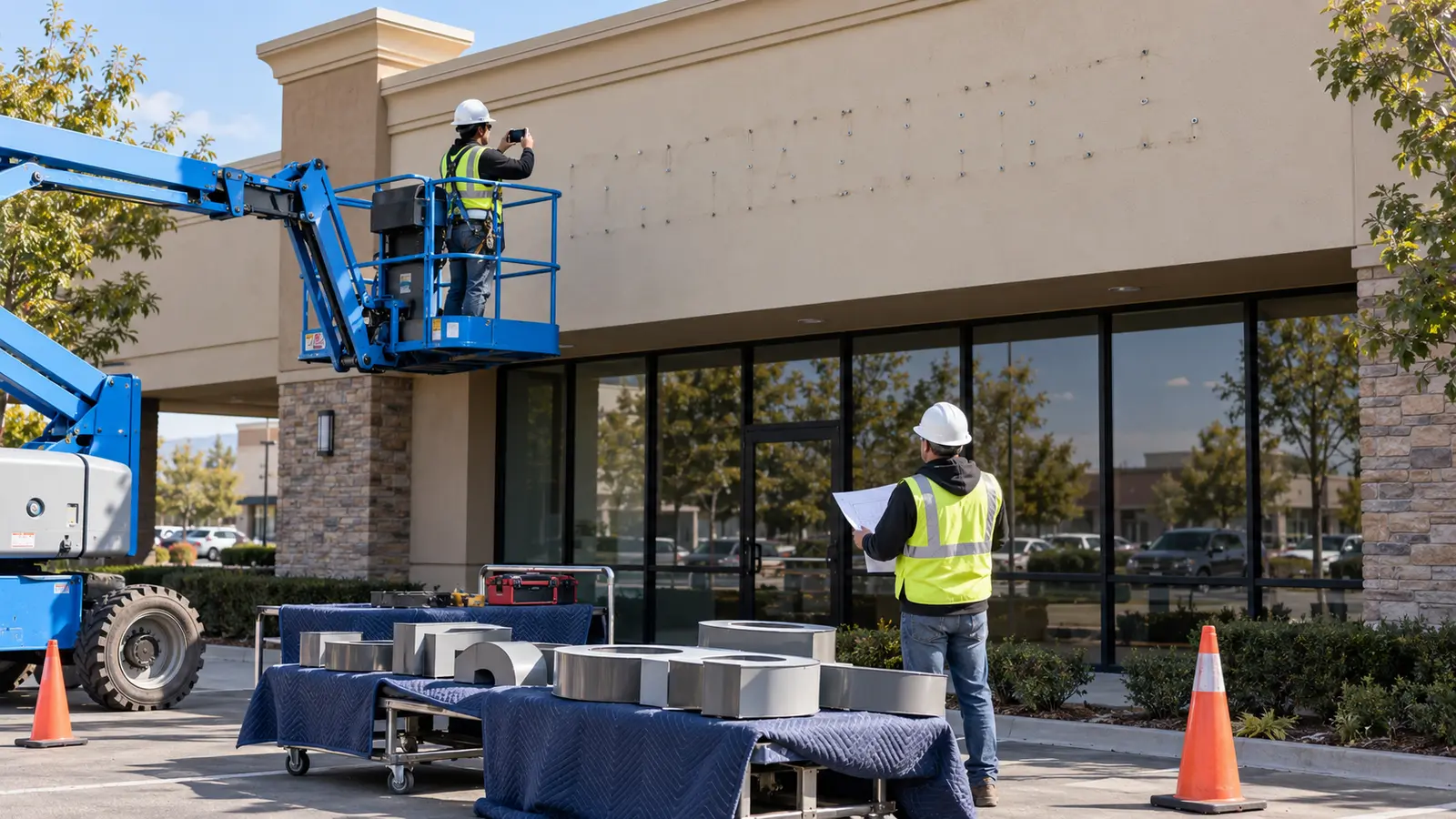
Removing a commercial sign is rarely complete when the letters or cabinet leave the wall. Mounting holes, anchors, raceways, wiring, faded paint and concealed patches can remain visible long after the business name is gone. A proper closeout plan treats sign removal and facade restoration as connected scopes.
This matters when a tenant moves out, a property changes brands, a sign is abandoned or a new tenant needs a clean surface. Documenting the existing installation before removal helps the owner understand what may be reusable, what must be made safe and what level of finish is expected.
Start with the lease, owner requirements and approved endpoint
The lease or property sign criteria may define who owns the sign, when it must be removed and how the facade must be returned. One property may accept sealed penetrations and a color-matched patch. Another may require a continuous repaint of the entire sign band.
Before scheduling work, obtain written direction from the property owner or manager. Define whether the goal is a temporary safe condition, a finished blank facade or preparation for a new sign. These are different deliverables with different costs and sequencing.
- Identify every sign and branded element included in the removal.
- Confirm whether removed components will be disposed of, stored or returned.
- Define the expected wall finish and acceptable color variation.
- Assign responsibility for electrical, roofing, waterproofing and painting work.
- Confirm hours, access routes and tenant protection requirements.
- Record the date by which the property must be ready for the next tenant.
Document the sign before removal
Photograph the complete elevation, close views of fasteners and penetrations, side profiles, electrical disconnects and any visible damage. Measure the sign and note whether it is direct-mounted, raceway-mounted, cabinet-mounted or supported by a separate structure.
A commercial sign site survey helps organize wall construction, access, electrical context and installation constraints. For removal work, add photographs from inside the tenant space when accessible because rear wiring and attachments may change the method.
Do not assume the original drawings still match the field installation. Signs are often serviced, refaced or modified during their life. The removal plan should follow verified conditions.
Separate sign work from facade restoration
Sign crews can remove letters, cabinets, raceways, faces and associated sign components within their scope. Facade restoration may involve stucco, masonry, metal panels, roofing membranes, waterproofing, painting or other trades. Define those boundaries before the sign is removed.
California’s C-45 sign contractor classification includes electrical and non-electrical signs, signs attached to structures and modifications to existing signs. The project team should still verify which licenses and trades apply to the actual wall, electrical and finish work.
When the existing sign is removed, inspect the revealed area before covering it. Photograph anchors, penetrations, patches, staining, corrosion and moisture indicators. If concealed conditions exceed the allowance, issue a documented change in scope instead of improvising an unapproved repair.
Plan the electrical boundary
Illuminated signs may have branch circuits, disconnects, power supplies, conduit and wiring inside or behind the wall. De-energizing, testing and modifying electrical systems require qualified personnel and site-specific procedures. Removing visible letters does not confirm that the circuit is safe or abandoned.
The closeout plan should state whether the circuit will be removed, capped for a future sign or left in an approved serviceable condition. Label and document any retained feed. Avoid burying components or conductors behind a patch without an approved electrical plan.
AA Sign Image’s maintenance and repair service can coordinate sign-condition findings, while its sign installation service provides a useful counterpart when the property is preparing for replacement signage.
Evaluate penetrations and attachment points
Direct-mounted letters can leave a pattern of fastener holes and electrical penetrations. A raceway may leave fewer primary anchors but a larger shadow or paint difference. Cabinet signs can reveal rectangular stains, old sealant and wall areas that weathered differently.
Choose repair methods based on the actual wall assembly. A surface patch that looks acceptable from the parking lot may not restore the weather barrier behind the finish. Property teams should route waterproofing, masonry, stucco or panel repairs to the appropriate qualified trade.
If a new sign will cover the same area soon, do not automatically skip repairs. The new mounting pattern, wall protection and permit drawings may require a clean and known substrate. Retained anchors should be verified rather than assumed reusable.
Account for ghosting and color variation
Ghosting appears when the protected area behind a sign has aged differently from the exposed facade. Dirt, ultraviolet exposure, previous paint and sealants can create a readable outline even after holes are patched.
Spot painting can reduce contrast but may remain visible because the surrounding coating has weathered. Agree in advance whether the scope includes a local blend, an architectural break or repainting a larger wall section. Create a sample when color matching is uncertain.
For metal cladding or architectural panels, replacement may produce a similar mismatch if the original finish has aged. Document the acceptance standard rather than promising an invisible repair under every light condition.
Review Stockton permit requirements
Stockton’s sign standards generally require permits to erect, move, alter or reconstruct signs, with listed exemptions for certain non-electrical work. The chapter also addresses abandoned and dilapidated signs. Removal, electrical closeout, structural changes and the replacement sign can involve different reviews.
Confirm the proposed scope with the City and property owner before work begins. A removal tied to a new tenant sign should align with the approved replacement drawings rather than becoming an isolated field decision.
The California sign permit guide explains the broader permit workflow, and AA Sign Image’s sign permit and drawing services can help prepare project information. Local officials determine what the specific Stockton project requires.
Sequence the work to protect the property
- Establish the work zone and protect customers, glazing and landscaping.
- Complete the approved electrical shutdown and verification.
- Remove faces, letters, cabinets and raceways in a controlled order.
- Sort components for disposal, storage or return.
- Inspect and photograph newly exposed conditions.
- Complete approved penetration, wall and finish repairs.
- Clean the facade and surrounding site.
- Perform final day and night review when retained lighting is involved.
Avoid leaving open penetrations or unsecured components between phases. If restoration cannot follow removal immediately, specify a temporary weather-safe condition and who will inspect it.
Prepare the property for the next sign
When a replacement is planned, coordinate removal with the new tenant sign package. The tenant sign replacement guide for Stockton shopping centers covers landlord criteria, surveys and permit coordination for that next phase.
Provide the new sign team with removal photographs, retained electrical information, wall repair records and final measurements. This reduces uncertainty and helps the next design respond to the actual facade.
To request a Stockton assessment, contact AA Sign Image with the property address, photographs, lease or landlord requirements, known electrical conditions and the desired final wall appearance.
Frequently Asked Questions
Who is responsible for repairing the wall after a tenant sign is removed?
Responsibility usually depends on the lease, property criteria and project contract. Confirm it in writing before removal, including the expected finish and whether other qualified trades will complete portions of the restoration.
Can old sign holes be reused for a new sign?
Do not assume they can. The new sign may use different loads, spacing, wiring or waterproofing details. Existing anchors and penetrations should be evaluated against the approved replacement design and actual wall condition.
Does commercial sign removal require a permit in Stockton?
The answer depends on the sign, electrical work, structural changes and related replacement scope. Stockton lists exemptions for certain non-electrical work, but the City should confirm the actual project before work begins.