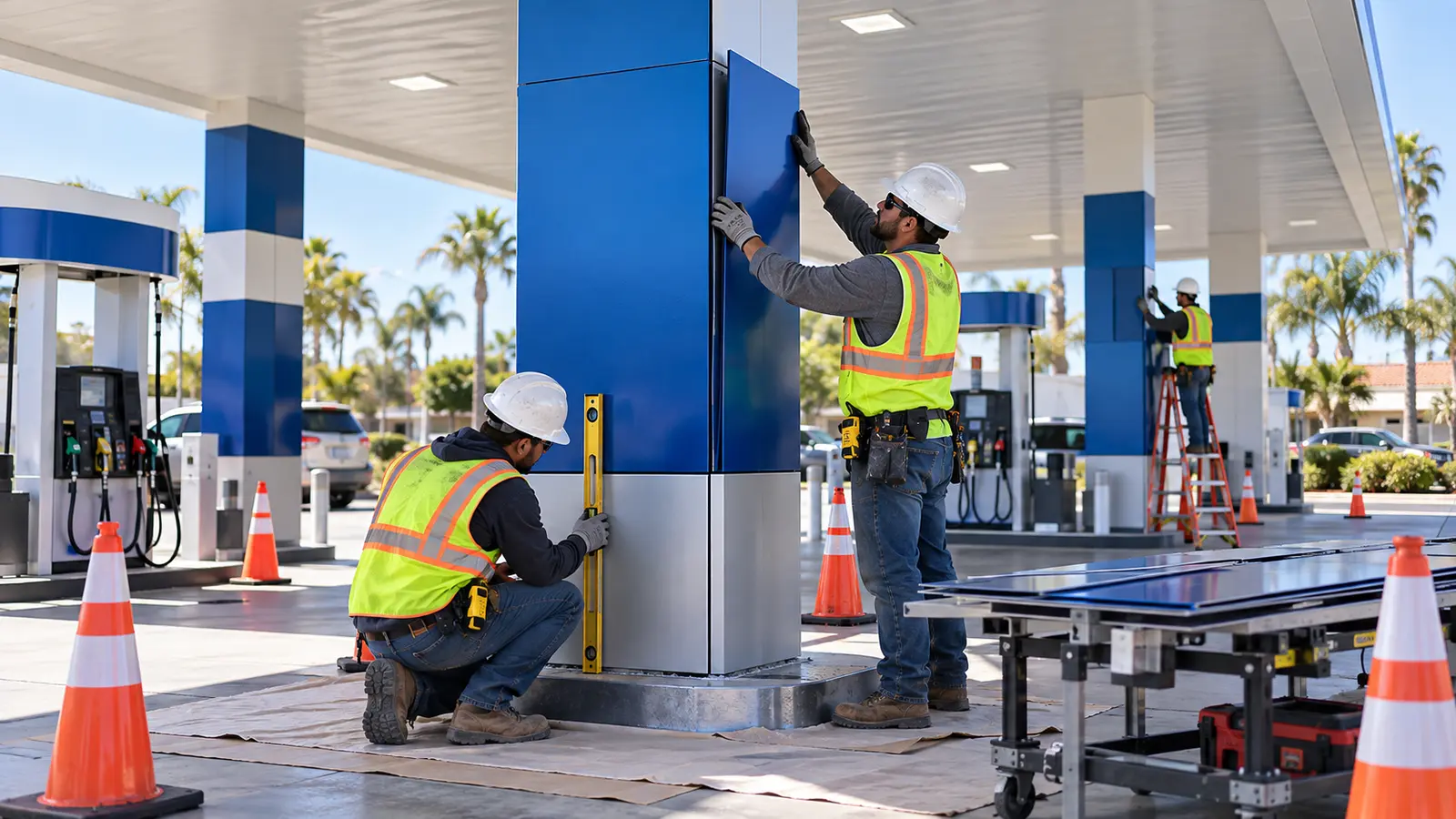
Gas station canopy column wraps help connect the forecourt to the site’s broader visual identity. When the finish is faded, dented, peeling or left behind after a brand change, replacing the column imaging can make the property look more consistent without treating the work as a fuel-system project. The visible cladding, however, sits in an active environment with vehicles, dispensers, lighting, curbs and operational safety requirements.
A reliable replacement plan starts by documenting the existing columns and defining the exact imaging scope. AA Sign Image supports gas station branding projects across California, including coordinated exterior image elements that must fit existing structures and brand standards.
Separate the Visual Wrap From the Structural Column
The term “column wrap” can describe different assemblies. Some are formed aluminum or aluminum composite panels attached around a structural support. Others use painted sheet metal, trim systems or applied graphics. The decorative layer is not the structural column itself.
Before estimating replacement, determine what is being removed and what must remain. If the underlying support shows impact damage, corrosion, movement or another structural concern, stop and route that condition to an appropriately qualified professional. Cosmetic cladding should not conceal a condition that requires evaluation.
The project scope should also exclude dispenser service, fuel piping and other regulated fuel-system work unless separately assigned to properly qualified parties. Clear boundaries keep the sign and imaging work focused.
Survey Every Column and Its Surroundings
Columns that look identical from a distance may have different dimensions, base details, penetrations or obstructions. A field survey should identify each column, record all faces and note how the existing panels are joined and attached.
Useful survey details include:
- Overall width, depth and wrap height
- Base, curb and canopy connections
- Seams, corner profiles, fasteners and access points
- Existing substrate and signs of moisture or corrosion
- Bollards, dispensers, trash units and vehicle clearances
- Electrical devices, labels, controls or access panels that must remain visible
- Work-zone options and safe equipment placement
Number the columns on the survey and drawings. This prevents panels fabricated for one location from being delivered to another with different field conditions.
Inspect Before Covering the Existing Surface
New cladding can improve appearance, but it should not be used to hide an unresolved substrate problem. Check for loose panels, sharp edges, failed sealant, trapped moisture, corrosion, impact damage and deteriorated attachment points. The replacement design should account for drainage, ventilation and service access where the existing assembly requires them.
Any required structural, electrical or fire-safety review should occur before cosmetic panels are installed. The imaging team should document out-of-scope conditions and coordinate with the operator rather than making unsupported repairs.
Coordinate the Column Design With the Full Forecourt
Column imaging is one component of a gas station rebrand. Colors and material breaks should coordinate with canopy fascia, dispenser graphics, price signs, directional signs, building graphics and other approved brand elements. A gas station rebranding checklist helps operators identify which elements will remain, which will change and which need separate surveys or vendors.
The design package should establish:
- Approved color specifications and finish direction
- Panel layout, seam alignment and corner treatment
- Relationship to canopy fascia and dispenser zones
- Placement restrictions for logos or copy
- Required clearances around labels, devices and access points
Avoid adding graphics by habit. Some brands use solid color blocks on columns, while others use restrained accents. The approved identity program should control the result.
Choose Materials for Exposure and Serviceability
Column wraps face sun, heat, rain, cleaning, vehicle exhaust and occasional contact. Material selection should consider exterior durability, finish quality, impact exposure, attachment, replaceability and compatibility with the existing substrate.
Formed metal or aluminum composite panels can create a clean, dimensional finish when properly detailed. Applied vinyl may be appropriate for selected graphic zones but depends on a smooth, compatible surface and correct preparation. Paint systems require suitable preparation and curing conditions.
The finish should also be practical to maintain. If one face is damaged later, a modular panel system may allow a targeted replacement rather than rebuilding the entire wrap. Document the final materials and color references for future maintenance.
Protect Required Access and Information
A decorative wrap must not block equipment access, controls, inspection points, required markings or ventilation. Survey photographs and elevation drawings should identify anything that remains visible or removable. Where a panel crosses an access area, use a deliberate removable detail rather than an improvised cutout.
Clearances around dispensers, bollards and vehicle paths also matter. A new profile should not project into an operational area without review. The finished column must work in the real forecourt, not only in a flat design rendering.
Review Permit and Approval Requirements
Permit needs depend on the work and jurisdiction. Stockton’s sign standards generally regulate the erection, movement, alteration and reconstruction of signs, while some limited copy changes without structural or electrical alteration may be treated differently. Column cladding that contains brand graphics or changes a sign element may require a scope-specific review.
Landlord approval, fuel-brand approval and other project requirements can apply in addition to municipal review. If the column work is part of a broader canopy or sign modification, assess the whole package rather than splitting related changes into disconnected assumptions.
AA Sign Image can coordinate drawings and sign-permit support for work within its scope. The applicable authority determines final requirements.
Sequence Installation Around Site Operations
Gas stations often remain open during exterior image work, so installation should be staged to protect customers, staff and installers. The operator and crew should agree on work zones, lane or dispenser impacts, delivery timing, material storage and daily cleanup.
A practical sequence may include:
- Confirm approved drawings and numbered column locations
- Inspect fabricated panels before mobilization
- Establish a controlled work area for one zone
- Remove existing cosmetic materials carefully
- Document newly exposed conditions
- Install, align and secure the replacement panels
- Inspect seams, corners, access points and finish
- Reopen the area only after tools and debris are cleared
The exact sequence should follow site-specific safety requirements. Work near fuel dispensing areas may require additional controls established by the operator and qualified parties.
Plan Column Imaging as Part of a Durable Rebrand
Gas station canopy maintenance and rebranding work best when visible elements are assessed together. Replacing column wraps while ignoring deteriorated fascia, inconsistent dispenser graphics or damaged directional signs can leave the site looking unfinished. A coordinated survey helps the operator prioritize immediate work and plan later phases without losing visual consistency.
Request a Gas Station Column Imaging Assessment
Effective gas station canopy column wraps begin with accurate dimensions, a sound substrate, approved brand details and a safe installation plan. If your California fuel site is rebranding or replacing worn column finishes, request a gas station column imaging assessment from AA Sign Image. We can document the existing conditions, define the sign and cladding scope, and prepare the project for fabrication and installation.
Frequently Asked Questions
Can new column panels be installed over existing cladding?
Sometimes, but only after the existing assembly and attachment points are evaluated. Installing over loose, corroded or moisture-damaged materials can hide problems and reduce the reliability of the new finish.
Are gas station column wraps structural?
Decorative column wraps are typically an exterior imaging or cladding layer, not the structural canopy support. Any concern about the underlying column should be evaluated separately by an appropriately qualified professional.
Can a gas station stay open during column wrap replacement?
It may be possible to keep part of the site operating with a staged work plan, but the operator must coordinate safe work zones, vehicle circulation and any dispenser impacts. The final plan depends on the site layout and applicable safety requirements.