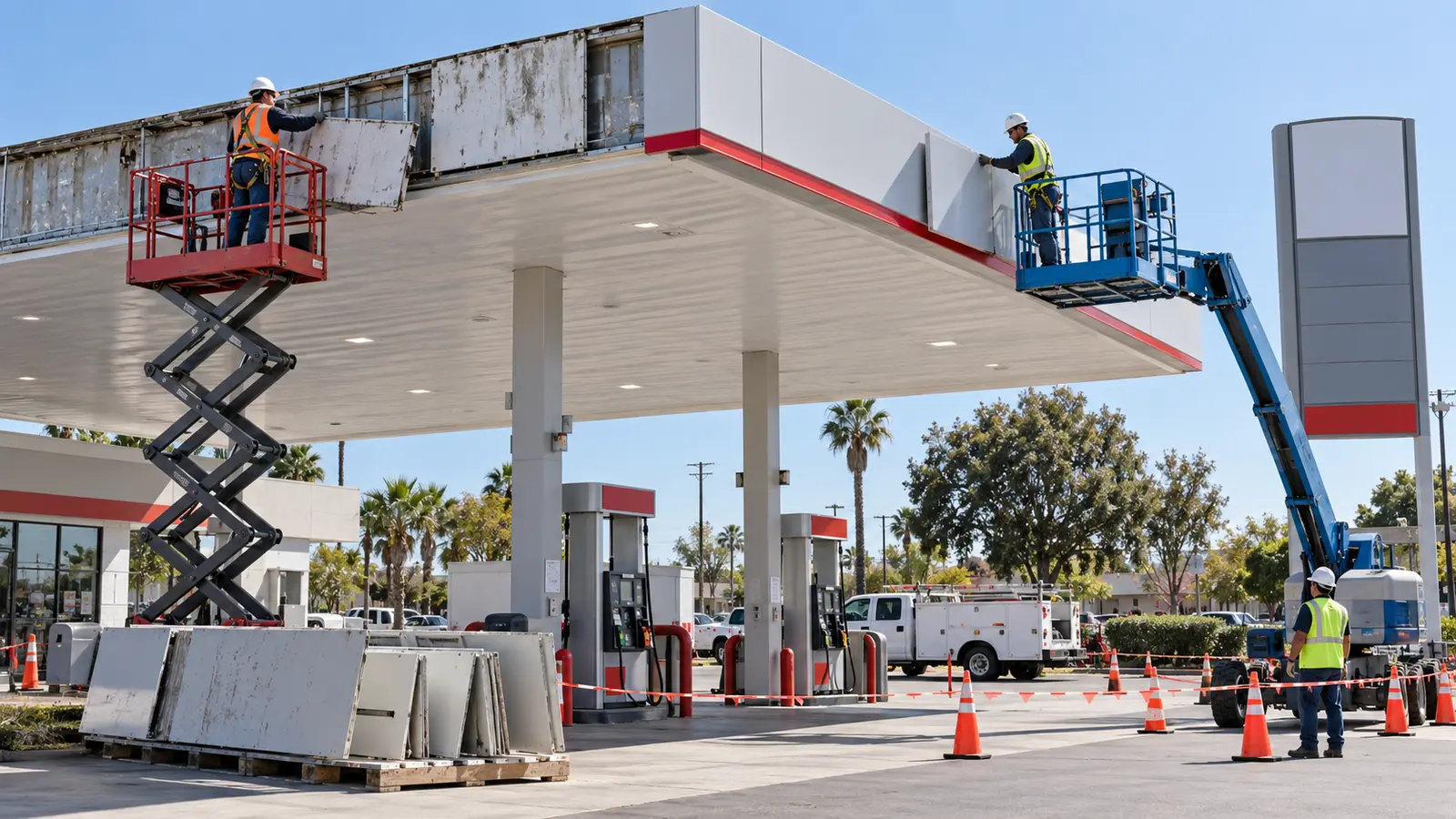
Replacing gas station canopy fascia is not simply a matter of covering old panels with a new color. The project can involve weathered substrates, hidden corrosion, panel joints, illumination, branded elements, penetrations, drainage paths and installation work above an operating forecourt.
A strong replacement plan separates cosmetic panels from the supporting canopy and other systems. It documents existing conditions, defines what stays and what changes, coordinates approvals and sequences field work around site operations.
Define the Replacement Scope
Begin by identifying the reason for the project. A brand conversion, storm damage, corrosion, faded finishes, impact damage and repeated panel failure can require different solutions. Record whether the goal is a face-only visual update, replacement of the panel system, lighting work or a larger canopy repair.
Keep scope language precise. Fascia panels, illuminated bands, logo cabinets, trim, soffit, gutters and structural framing are different components. A quote that says replace canopy may be impossible to compare unless it lists the exact elements.
Survey Every Canopy Elevation
Photograph and measure all elevations, corners, returns and transitions. Record panel widths, heights, joints, fasteners, trim profiles, penetrations, electrical components and visible damage. Note the relationship to dispensers, bollards, buildings, signs and vehicle routes.
- Panel material, thickness and attachment method
- Corner conditions and expansion joints
- Fading, dents, cracking, delamination or loose edges
- Corrosion, staining and evidence of water entry
- Lighting bands, logo locations and service access
- Soffit condition and interface with the fascia
- Lift access, clear height and traffic constraints
- Existing drawings, permits and brand records
A gas station canopy maintenance checklist can help operators distinguish routine observations from conditions that justify a deeper assessment. Field photos alone cannot confirm concealed structural conditions, so unresolved findings should be assigned for appropriate evaluation.
Inspect What the Existing Panels May Be Hiding
Removing fascia can reveal old fasteners, abandoned wiring, mismatched framing, sealant failure or corrosion that was not visible during the initial walk. Plan an inspection point after selective removal and before all replacement panels are released when the condition is uncertain.
Do not use new panels to conceal active deterioration. Define who evaluates the supporting substrate, who authorizes repairs and how additional work will be documented. A controlled contingency is more useful than assuming every concealed surface is sound.
Choose a Panel and Finish System for the Actual Site
The selected panel system must fit the verified framing, joint layout, corner details and maintenance needs. Color and gloss should be evaluated against brand standards, neighboring materials and the appearance of the whole property.
Ask how the finish will age in Central Valley sun, dust and regular cleaning. Confirm the approved cleaning method and replacement strategy for individual panels. If a future brand change is likely, modularity and access may influence the detail.
Coordinate Illumination and Brand Elements
Canopy fascia may include internally illuminated bands, separate logo cabinets or non-illuminated graphics. Document which items remain, move or leave the site. Changing the panel system can alter light transmission, service access or the fit of existing components.
Review daytime and nighttime appearance. Uneven illumination, shadows at joints or mismatched translucent materials can remain visible even when the daytime finish looks clean. Keep electrical work within the approved project scope and coordinate access to serviceable components.
Review Local Permits and Property Approvals
Permit requirements depend on the jurisdiction and actual work. Stockton’s sign standards generally require a permit to erect, move, alter or reconstruct a sign unless a listed exemption applies. Changes involving electrical work, sign cabinets, dimensions or broader reconstruction can require a different review from a simple non-electrical copy change.
Obtain brand, distributor, property owner and landlord approval where applicable. The permit drawing, brand elevation and fabrication package should describe the same panel layout, colors, lighting and sign elements.
California’s C-45 sign contractor classification includes electrical and non-electrical signs, signs attached to structures and modifications to existing signs. Canopy work can also include scope outside sign contracting, so assign each component to a properly qualified party.
Plan Work Around an Operating Fuel Site
The operator should define access, working hours, lane closures, equipment staging and communication with employees. Elevated work zones must be separated from customers and vehicles. The crew needs a site-specific plan for lifts, deliveries, removed panels and daily cleanup.
Sequence work so the canopy remains weather-resistant and the site does not lose required identification or operational information. Coordinate temporary branding when needed. Stop and reassess if concealed conditions, weather or traffic make the planned method unsuitable.
Connect Replacement With Rebranding
A fascia replacement may be one package within a broader fuel-brand conversion. The gas station rebranding checklist for California operators covers the full transition from site assessment and permits through installation and closeout. Keeping the fascia package connected to the complete sign schedule prevents mismatched colors, duplicated mobilization and missing assets.
AA Sign Image’s gas station branding services include canopy imaging, price signs, decals, pylon signs and related project coordination. A coordinated program should still identify separate owners for fuel-system, building, electrical and sign work.
Prepare Comparable Proposals
- Verified dimensions and elevation-specific quantities
- Panels, trim, corners, bands, logos and lighting listed separately
- Substrate repairs included, excluded or carried as an allowance
- Finish system, colors and approved samples
- Removal, disposal and return of branded materials
- Permits, drawings, equipment and traffic control
- Site hours, phasing and business-continuity assumptions
- Warranty and closeout documents by component
Compare proposals against the same sign schedule. A lower price may simply omit concealed-condition work, electrical scope, night testing or removal. Clear exclusions help the operator decide which risks remain.
Complete Installation and Closeout QA
Inspect panel alignment, joints, corner transitions, fasteners, finish consistency, penetrations and weather sealing. At night, verify illuminated bands and logos for even appearance. Confirm that removed materials, temporary items and open punch-list work are documented.
Store approved drawings, samples, permits, inspection records, warranties and before-and-after photographs with the property file. To scope a California project, contact AA Sign Image with the address, all canopy elevations, brand standards, known damage and target completion window.
Frequently Asked Questions
Can new fascia panels be installed over old gas station canopy panels?
That decision depends on the existing panel system, substrate, attachments, moisture conditions, added thickness and approved detail. Covering deteriorated material can conceal problems, so the existing condition should be evaluated before a method is selected.
Does canopy fascia replacement require a sign permit?
Requirements vary by jurisdiction and scope. Non-electrical graphic changes may be treated differently from alterations to cabinets, dimensions, illumination or supporting construction. Confirm the actual project with the local authority before fabrication.
Can a gas station remain open during fascia replacement?
Some projects can be phased around operations, but lift access, lane closures, electrical shutdowns, weather and concealed conditions may require temporary restrictions. The operator and contractor should approve a site-specific sequence and controlled work zones.