
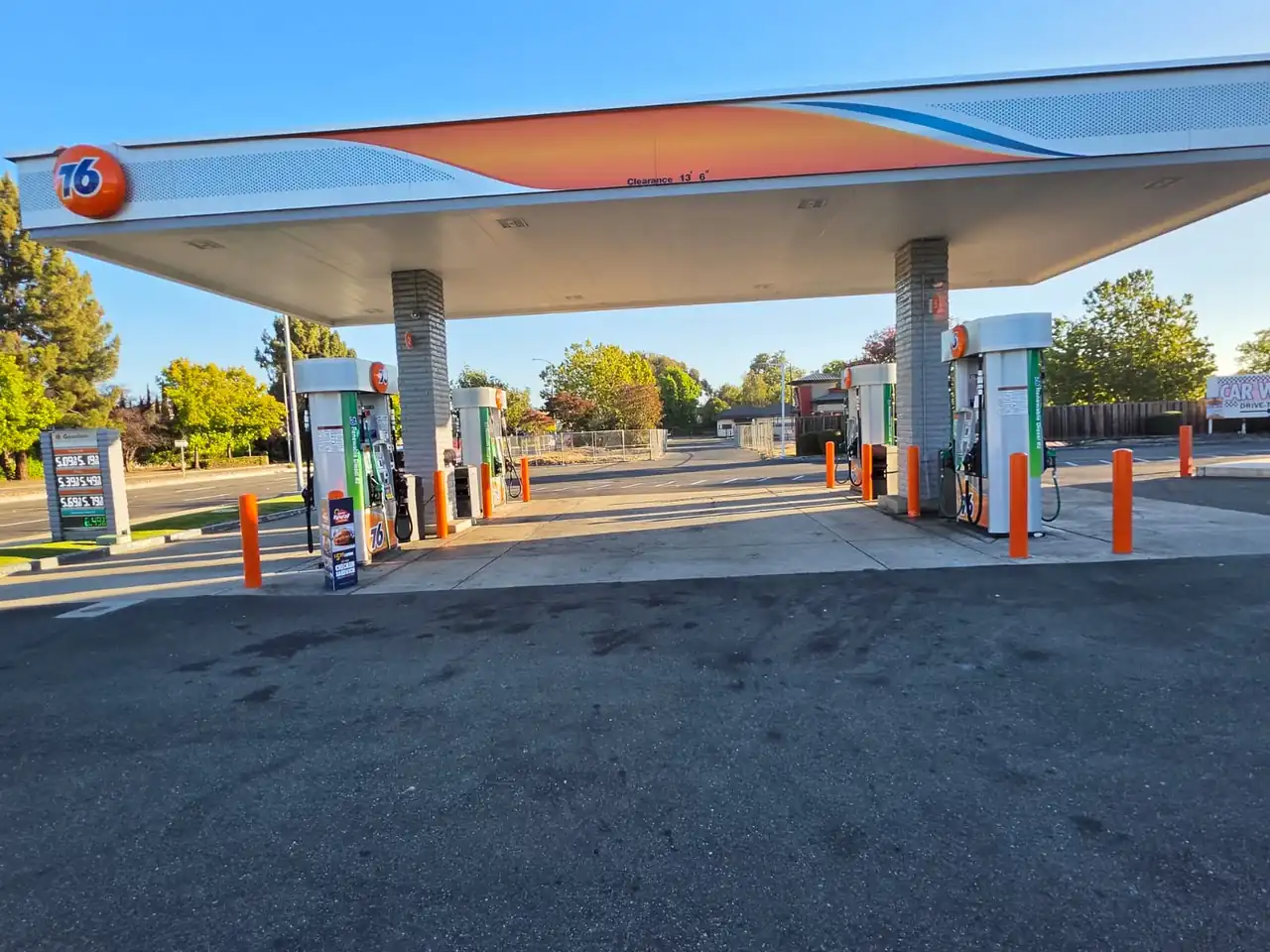
A gas station rebrand touches more than one sign. The visible system may include canopy fascia, price displays, pylon or monument structures, dispenser graphics, building identification, directional signs, car wash signs, and small operational graphics. If each item is measured or photographed in isolation, missing conditions can surface after design, pricing, or fabrication has started.
A gas station signage site survey creates a single asset record for the project team. It should document what exists, where it is located, how it is constructed, what can be observed safely, and which conditions require further evaluation. The survey is an input to design and planning, not a substitute for engineering, electrical diagnosis, regulatory inspection, or work on fuel-dispensing equipment.
By the AA Sign Image team. Updated November 17, 2026, with notes from our 2026 job log.
The Short Answer
A gas station signage survey documents the canopy, price signs, dispensers, buildings, access, utilities and brand scope before any design starts. Measure the inside of existing cabinets, check how the crew will reach the sign and identify the system brand before ordering.
Who This Guide Is For, and What It Does Not Solve
It is for gas station operators and project teams who need a survey before a rebrand or replacement. It does not replace a licensed professional’s measurements.
Define the Survey Scope Before Arriving
Start with the business objective. Is the project a full rebrand, a debrand, a canopy refresh, a price-sign replacement, a change in fuel grades, a dispenser-graphics update, or a repair program? The answer determines which assets need production measurements and which only need to appear in the photo inventory.
Request the property address, current and future brand packages, known asset list, target schedule, landlord or operator contacts, available drawings, known permit records, and any restrictions on site access. If several locations are involved, use the same asset naming convention and survey form across every site. AA Sign Image’s gas station branding service describes a sequence that begins with site survey and scope confirmation before drawings, permits, fabrication, and installation.
Create a Site Map and Asset ID System
Begin the field record with an orientation map. Identify street frontages, driveways, traffic direction, fueling islands, canopy, convenience store, car wash, price sign, air or vacuum area, and other relevant structures. Assign a unique ID to every surveyed asset, such as CNP-01 for a canopy elevation or PSD-01 for a price-sign display.
Use those IDs consistently in photographs, measurements, notes, and the final sign schedule. A wide photo should establish context, followed by elevation and detail photographs. Record the direction each sign faces because sun exposure, visibility, traffic approach, and access can differ by elevation.
The general commercial sign site survey checklist provides a useful base. A fuel site adds more asset types, more circulation considerations, and important boundaries around operating equipment.
Document Canopy Fascia and Columns
For each canopy elevation, record overall length and height, fascia depth, panel breaks, corners, seams, existing graphic boundaries, attachment method visible from an accessible location, lighting locations, and the relationship to gutters, downspouts, cameras, speakers, or other obstructions. Photograph each end condition and any transition between materials.
Note dents, corrosion, loose panels, fading, mismatched repairs, water staining, and damage that may affect the proposed finish. These observations are condition flags, not structural conclusions. If the new brand package changes the fascia depth, corner treatment, or illumination concept, the team may need detailed investigation beyond the initial survey.
Survey columns individually. Record their width, depth, height to the fascia, base condition, guards, dispenser relationship, emergency equipment, decals, and clearance around the proposed wrap. The gas station canopy maintenance checklist and canopy column wrap guide help distinguish appearance work from conditions that need separate repair review.
Measure the Price Sign or Pylon
A price display should be surveyed as a complete structure. Record the overall cabinet or monument dimensions, display openings, digit type and height, fuel-grade labels, logo area, cladding panels, base, access doors, visible fasteners, and observable electrical entry. Photograph both faces and the side profile.
Confirm whether pricing is changed manually, remotely, or through an existing control system, but do not open energized cabinets or promise compatibility from an exterior observation. Capture model labels only when they are safely visible and permitted by the operator. Document landscaping, curbs, traffic exposure, and the setup area that installation equipment would require.
The gas station price-sign replacement guide explains why display format, structure, controls, power, visibility, and permitting should be coordinated before a replacement is ordered.
Inventory Dispenser Graphics Without Servicing Fuel Equipment
Assign an ID to every dispenser position and photograph all customer-facing sides. Record graphic panel dimensions, grade-button areas, door seams, display windows, card-reader and receipt areas, regulatory labels, safety decals, hose paths, and damaged or contaminated surfaces. The survey should clearly distinguish replaceable brand graphics from labels or components controlled by the operator, equipment manufacturer, or regulator.
Do not remove panels, interfere with seals, cover required labels, or work on fueling equipment as part of a signage survey. OSHA’s flammable-liquids standard includes automotive service stations within its scope, reinforcing the need to respect the operating environment and keep the initial signage survey nonintrusive. Site-specific operating rules and qualified parties govern any work near fuel systems or energized equipment.
For planning distinctions, review the dispenser graphics replacement guide. It focuses on panel identification, artwork, substrate preparation, sequencing, and documentation without treating graphics work as fuel-equipment service.
Record Building and Car Wash Signs
Survey convenience-store identification, wall signs, fascia bands, door and window graphics, hours panels, address numerals, and service messaging. Show how each sign relates to entrances, windows, architectural bands, exterior lighting, and other tenant or vendor graphics.
If a car wash is present, document entry and exit identifiers, clearance bars, menu or instruction signs, wall graphics, pay-station surroundings, and the wet environment. Separate branding assets from operating, clearance, safety, and equipment instructions. The car wash sign replacement guide provides additional planning questions for these conditions.
Map Directional and Operational Signage
Photograph entrance and exit signs, directional arrows, diesel or truck routing, air and vacuum identifiers, parking signs, curb markings associated with the sign plan, delivery-zone signs, and other wayfinding. Record each location and orientation on the site map.
Do not assume every operational sign belongs in the brand-replacement scope. Some messages may be required by an authority, controlled by the operator, or tied to a separate traffic or accessibility review. The asset matrix should identify the responsible party and status: replace, retain, relocate, verify, or outside scope.
Observe Illumination and Utilities Safely
Record whether each sign appears illuminated, the visible light source type, existing disconnect or access location when safely observable, conduit routes, photocells, and obvious nonworking sections reported by the operator. Daylight and nighttime photographs can be useful when available, but a single visit should not claim to diagnose concealed wiring, power quality, structural support, or code compliance.
Flag unknowns explicitly. If a price sign must connect to an existing controller, if a canopy band appears internally illuminated, or if a sign circuit cannot be identified, list the required follow-up instead of guessing. Electrical and structural determinations should be made by the appropriately qualified professionals for the project.
Plan Access Around an Operating Fuel Site
Measure the practical installation environment: driveway widths, curb radii, canopy clear height, overhead conflicts, landscape setbacks, traffic lanes, staging locations, equipment reach, and the distance from setup areas to each sign. Record busy periods and operator preferences for temporary closures or phased work.
A survey should avoid blocking emergency equipment, dispensers, accessible routes, entrances, or customer circulation. Future installation planning may require cones, spotters, isolated work zones, scheduled island closures, or off-hours work, but the final plan depends on site operations and the chosen means and methods.
Build a Brand and Asset Matrix
Combine field data with the new brand standards in a matrix. For every asset ID, list the current condition, proposed action, finished dimensions, artwork reference, color or material reference, illumination, mounting concept, permit status, responsible party, and unresolved questions.
This matrix prevents a common coordination problem: an elevation shows one version, the proposal names another, and the production file contains a third. Add revision dates and require approvals to reference the same asset IDs. For a full transition sequence, use the California gas station debranding checklist.
Confirm Permits and Existing Approvals
Identify which assets are new, altered, refaced, relocated, removed, or repaired. Those distinctions can affect drawings and permit review. Search available records, but do not assume an old approval covers a changed scope. Verify the current authority, property requirements, and applicable sign rules for the address.
For Stockton projects, current City sign standards and permit instructions should be reviewed before submission. For sites outside Stockton, the relevant city or county process applies. A multi-site rollout may require a jurisdiction matrix because the same brand package can face different local requirements.
Deliver More Than a Photo Folder
A useful survey deliverable includes a dated site map, asset schedule, labeled photographs, verified measurements, condition observations, access notes, drawing inputs, and a list of unknowns or follow-up investigations. It should separate measured facts from assumptions and proposed design decisions.
The package should be understandable to someone who did not attend the visit. That allows estimators, designers, permit coordinators, fabricators, installers, and the operator to review the same evidence and raise questions before production.
Gas Station Signage Site Survey Checklist
- Define the rebrand, debrand, repair, or replacement scope.
- Collect the current and future brand packages.
- Create a site map and unique asset IDs.
- Photograph every elevation and sign in context.
- Measure canopy fascia, corners, panels, and columns.
- Record price-sign structure, displays, controls information, and access.
- Inventory dispenser graphic surfaces without opening equipment.
- Survey building, car wash, directional, and operational signs.
- Record observable illumination and utility conditions safely.
- Document circulation, staging, clearances, and work windows.
- Flag structural, electrical, equipment, and regulatory unknowns.
- Build an asset matrix tied to the approved artwork revision.
- Verify property and jurisdiction requirements.
What We Saw on Gas Station Surveys in 2026
Entries from our 2026 job log, with locations generalized and no client named:
- Fremont, July 2026. The first visit measured every island around the store before any work started.
- Concord, August 2026. The office asked the field crew to open a price sign cabinet and take the internal measurements, plus the height of the sign.
- Benicia, July 2026. The survey was to check the missing fuel-grade square and which digit brand the system needed.
- San Francisco, August 2026. Replacing eight canopy pieces (a sheet 37 feet long and 16 inches wide) required removing six lamps and 26 supports, 13 on each side.
- Woodland, August 2026. A pylon survey checked how to reach the lower cabinet with a boom.
What we take from this: measure the inside, identify the system and plan the access before the day of the work.
What to Do This Week
- Walk the site and photograph the canopy, price signs, dispensers and building.
- Open the price sign cabinet and measure the inside.
- Note the brand of the price system and the digit size.
- Plan how the crew will reach each sign.
- List what the operator or the brand controls and the sign company does not.
Frequently Asked Questions
Can a gas station remain open during a signage site survey?
Often, a nonintrusive visual and measurement survey can be coordinated around operations, but access and safety conditions vary. The operator should approve the visit plan, and the survey must not interfere with fueling equipment, emergency systems, or customer circulation.
Can the survey confirm that a sign structure or electrical system is safe?
No. The survey can document visible conditions and identify warning signs or unknowns. Structural capacity, concealed conditions, and electrical safety require the appropriate qualified evaluation.
What should the operator provide before the survey?
Useful inputs include the site address, project objective, brand standards, known asset list, target schedule, operator contacts, access rules, available drawings or permits, and known equipment or condition issues.
Request a Fuel-Site Signage Survey
AA Sign Image can help document the existing sign system and translate the findings into a coordinated rebranding, drawing, fabrication, and installation scope. Request a fuel-site signage survey with the address, project goal, brand package, site contact, and desired schedule.
Sources
Ready to Upgrade Your Commercial Signage?
Your signage should do more than stand in place. It should support your visibility, represent your brand, and help your business look reliable every day.